
Rising Ransom Payments Amidst Cybersecurity Challenges
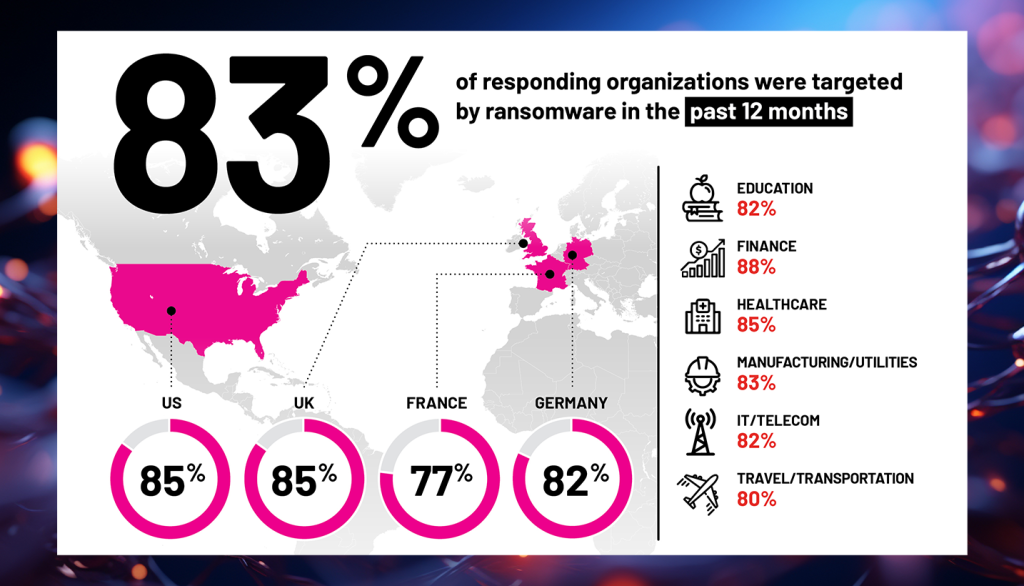
In a stark revelation about the state of global cybersecurity, a recent report has illuminated the ongoing struggle that organizations face against cybercriminals. Despite significant advancements in defensive measures and an increased understanding of threats, nearly half of all global companies chose to pay ransoms to regain access to their data in 2025. This finding comes from an extensive report by a leading cybersecurity firm, highlighting the persistent vulnerabilities within the digital landscape.
Key Findings from the Report
The report, titled “State of Ransomware 2025,” disclosed that 46% of surveyed firms paid ransoms, marking the second-highest rate observed in the past six years. Notably, 53% of these companies successfully negotiated lower payments than originally demanded, often through direct negotiations or by utilizing the expertise of third-party negotiators.
Shifts in Financial Impact
Interestingly, while the average ransom demand decreased by approximately one-third year-over-year, the median payment experienced a more dramatic decline, dropping by 50% from $2 million in 2024 to $1 million in 2025. This trend indicates a growing capability among organizations to mitigate the financial repercussions of cyberattacks. Chester Wisniewski, the Field Chief Information Security Officer at the cybersecurity firm, emphasized that heightened awareness has led many companies to employ incident responders, which in turn helps to reduce ransom payments and expedite recovery processes.
Variability in Ransom Demands
The report further highlighted significant disparities in ransom demands based on organizational size. For instance, large corporations with revenues exceeding $1 billion encountered median ransom demands of $5 million, while smaller firms earning $250 million or less faced typical demands below $350,000. This variance underscores the different strategies and impact experienced by organizations depending on their scale and resources.
Exploitation of Vulnerabilities
For the third consecutive year, the report indicated that attackers primarily gained access to systems through exploited vulnerabilities. Approximately 40% of victims revealed that hackers exploited security gaps they were not aware of, emphasizing the need for robust cybersecurity measures and continuous monitoring. A critical shortage of skilled cybersecurity professionals remains a significant hurdle; 63% of victims cited staffing issues as a key challenge, with larger organizations pointing to a lack of expertise and mid-sized firms noting insufficient manpower.
Signs of Resilience
Despite these daunting challenges, many organizations are demonstrating resilience in their responses. The report found that 44% of attacks were successfully thwarted before any data encryption took place, the highest rate recorded in six years. Furthermore, the incidence of data encryption itself reached a six-year low, with only half of attacks resulting in encrypted data.
Interestingly, fewer companies are now relying on backups as a primary means of data recovery. Only 54% utilized this method, marking the lowest recorded figure in six years. The average cost of recovery also saw a significant decrease, plummeting from $2.73 million in 2024 to $1.53 million in 2025, suggesting an improved efficiency in recovery processes despite the substantial ransom payments.
Recovery Times and Industry Trends
The report also indicated notable shifts in recovery times for affected firms. Over half of the organizations were able to recover from attacks within a week, a significant increase from 35% in 2024. Conversely, only 18% of companies took over a month to recover, down from 34% the previous year.
Ransom payment trends varied across industries, with state and local governments reporting the highest median payments at $2.5 million, while healthcare organizations noted the lowest, averaging around $150,000.
Recommendations for Organizations
To combat the growing threat of ransomware, Wisniewski advised firms to address the fundamental issues that contribute to their vulnerabilities. This includes patching known vulnerabilities, enhancing visibility into potential attack surfaces, and bolstering resources.
The report concluded with a call for organizations to adopt proactive security strategies such as implementing multi-factor authentication, ensuring timely software patches, and investing in managed detection and response services.
The insights gathered from a survey of 3,400 IT and cybersecurity leaders across 17 countries, all of whom experienced at least one ransomware attack in the past year, underscore the pressing need for continued vigilance and adaptation in the face of evolving cyber threats.